How to Hire Truck Drivers: The Settled-Driver Method
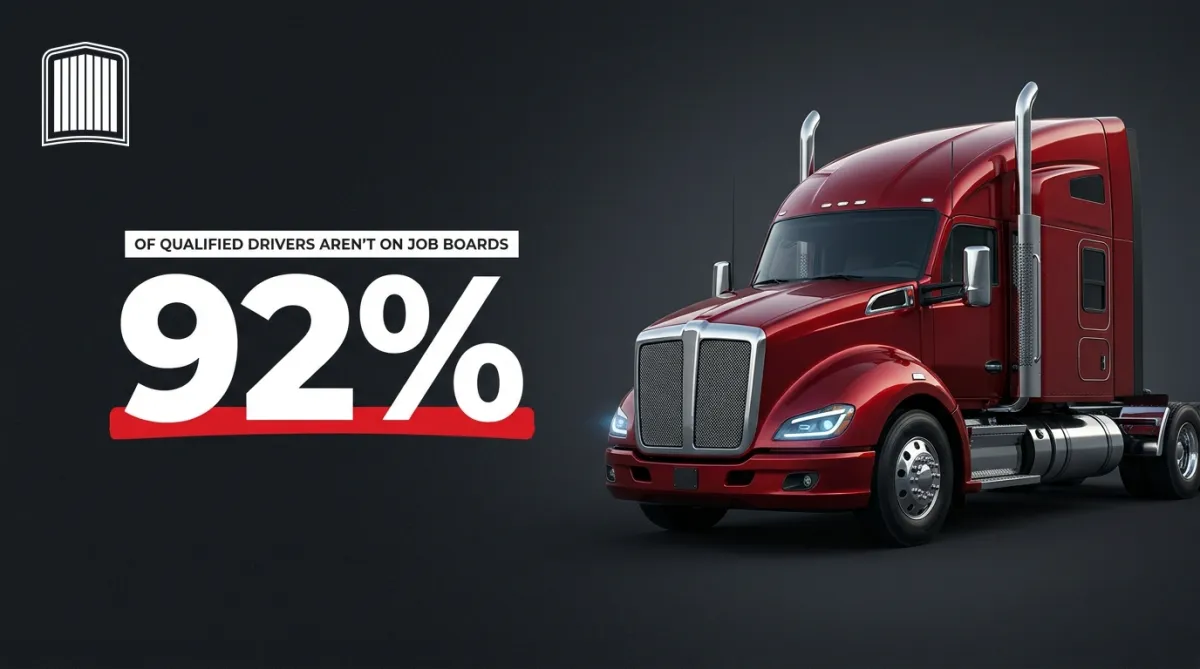
The proven way to hire truck drivers is to stop competing for the small pool who are actively job hunting and start reaching the settled drivers who are not. Job boards and agencies all fish the same 8% of active seekers, which is why hiring feels like a bidding war. The fleets that hire consistently build a pipeline to the 92% of qualified drivers who are already employed and not looking, then give them a real reason to move.
Hiring truck drivers breaks down into five stages: find the right pool, get drivers to raise their hand, qualify for fit, move fast, and onboard for the first 90 days. Skip a stage and your trucks stay empty longer than they should.
How to hire truck drivers, step by step
- Map your lanes and hiring radius. Know exactly which drivers you can realistically seat before you spend a dollar.
- Target settled drivers, not job boards. Reach the 92% who are employed and not actively looking, where there is almost no competition.
- Lead with the reasons a settled driver would move. Pay, home time, equipment, and respect move good drivers. Generic "now hiring" ads do not.
- Qualify for fit before you interview. Screen on lanes, equipment, tenure, endorsements, and pay so your team only talks to drivers who fit.
- Move fast. Respond within 24 hours and build show-up intent. Slow follow-up is where most hires are lost.
- Onboard for the first 90 days. Set honest expectations and structured check-ins so the driver you hired is still driving in three months.
Why job boards and agencies make hiring harder
Job boards and recruiting agencies sell access to the same active job seekers every carrier is already bidding on. That is a red ocean: rising costs, lower-quality applicants, and drivers who job-hop. The drivers worth hiring are usually the ones who are not looking, and you only reach them by going to where they actually are instead of waiting for them to apply.
Traditional hiring vs a settled-driver pipeline
| Job boards and agencies | Settled-driver pipeline | |
|---|---|---|
| Who you reach | The 8% actively looking | The 92% already employed |
| Competition | Every carrier bidding | Almost none |
| Driver quality | More job-hoppers | Settled, fit-screened |
| What you build | A bill that repeats | A pipeline you own |
How GTD does it for you
GTD identifies already-employed CDL-A drivers within your hiring radius, matches them to your lanes and pay, and turns them into qualified, seated drivers you own the relationship with. Most fleets see their first qualified interviews in 7 to 10 days, and seats fill in 30 to 90 days depending on lanes and radius. If you follow the process and your trucks are not seated, GTD keeps working at no charge until they are.
Frequently asked questions
What is the best way to hire truck drivers?
Build a pipeline to settled, already-employed drivers who fit your lanes and pay, instead of bidding for the 8% of drivers on job boards. You reach better drivers with less competition.
How long does it take to hire a truck driver?
With a settled-driver pipeline, most fleets see first qualified interviews in 7 to 10 days and seat drivers in 30 to 90 days, depending on lanes, radius, and experience required.
How much does it cost to hire a truck driver?
Industry average is around $4,000 per hire, but the number that matters is cost per seated driver who stays past 90 days. Sourcing settled drivers on fit lowers that real cost.
Are job boards or agencies better for hiring drivers?
Both fish the same active job-seeker pool, so both compete on price for lower-quality applicants. A pipeline to settled drivers reaches the 92% that job boards and agencies cannot.
See if your fleet qualifies
Book a call and we will map the fastest path to seating your trucks with qualified drivers.


